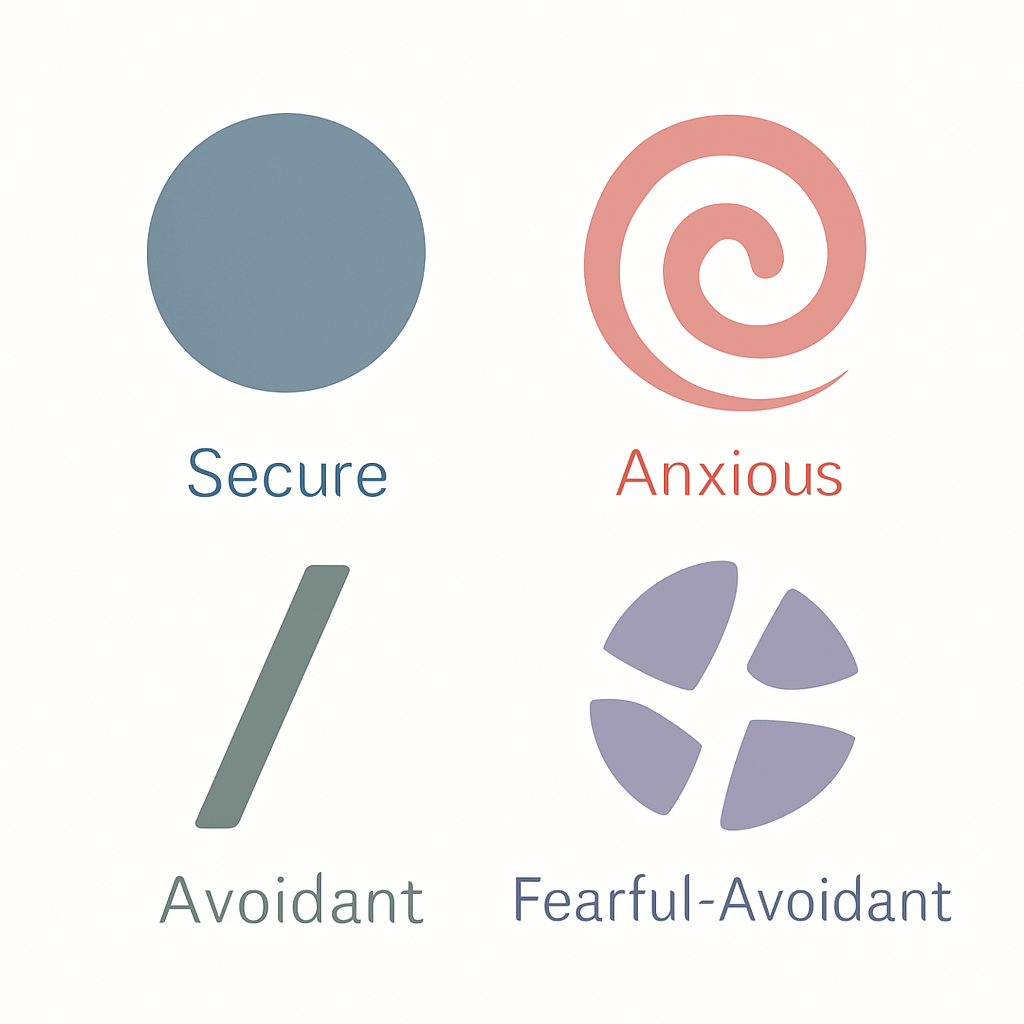
I wrote a paper and created a presentation examining emotional learning principles in relation to professional leadership practice. Emotional learning is largely done implicitly, rather than formally. It begins in infancy and develops through childhood from our interactions with our parental figures and to an extent our peers. For some, explicit emotional learning will never take place, and their life decisions will be informed through a lens developed as a child, no matter how healthy or unhealthy that patterning is. If emotional learning becomes formally taught, it happens much later in life after patterns of attachment have developed.
John Bowlby and Mary Ainsworth were the first to describe attachment in terms of four categories: secure, anxious, avoidant, and fearful avoidant (see paper for definitions). Brené Brown Advocates for embracing the power of vulnerability in the workplace.This includes practices such as identifying and sharing emotions particularly creating space for negative emotions such as fear so as to prevent a shame-based work environment.
I argue that while such strategies May be quite useful in some environments, that Brown’s leadership recommendations can be awkward and inappropriate in high pressure, high stakes environments such as during a surgical procedure or in the field on a military mission against hostiles. I highlighted, “In the West, most individuals are quite insulated from life and death situations and may not even perform manual labor at their workplace. But that doesn’t mean that such jobs to not exist, or that leadership is not required in such jobs.”
While I am personally a huge fan of Brown and her life’s work, I also am an advocate for compassion and seeing the value in other’s gifts. Though sharing feelings might not be the biggest strength of individuals with avoidant attachment, they will excel in areas where people with other attachment styles will not. I feel that it is only fair that we present leadership principles in context with their strengths and weaknesses and that we honor the strengths of all types of people. Whether we work in libraries or not, we will come into contact with people who have different attachment styles than we do and it is important to respect their differences.
