For our assignment, we had to look at different blogging platforms, choose one, and then make a blog. I knew right away that I wanted a blog that was in a written word form, not an audio form. That ruled out podcasting. I examined the available platforms and then watch clips of YouTube tutorials for each platform on “how to make your first website,” on the platforms. I’ll discuss two, Weebly and Blogger.
I was very impressed with Weebly. It had an elegant design. It looked pretty user-friendly. I will definitely keep it in mind in the future.
Blogger just looked strange to me. I have the most experience on WordPress. It seemed like there were so many complicated features and I felt intimidated. I know that WordPress is complicated and has a lot of features too, but if I am going to switch platforms, I wouldn’t want to go from something complicated to something else complicated.
The thing that stuck out at me as well about all of these intro videos is that you can really tell who the platform is for based on the style of the video. The Weebly intro video was performed by a young, hip guy who was both chill and confident. He had done the work to produce a high quality video including owning a camera with excellent resolution, mastering cut techniques, setting up beautiful lighting, and using a top tier microphone set up. It’s easy to see, Weebly is for young professionals who want to create artistic and sharp websites.
The Blogger intro video was a computer voiceover. Maybe the people using Blogger like to be more anonymous? It appears that Blogger might have been made before Weebly and it has been added to and added to like WordPress, though I’m not entirely sure. It felt more impersonal. It feels like the websites on Blogger might be less about how others perceive you and more about getting your website to do things. Neither one is good or bad. It’s about what you as a creator need for your project.
Ultimately, I decided to go with WordPress. Though I am familiar with it, I wanted to go deeper. I had created a portfolio site in WordPress, but I did not know how to add a blog to a portfolio site.
It took me quite some time to get the formatting right in WordPress, but here we are!

The website I created is my graduation e-portfolio. I thought it would make the most sense to add my Lib Tech Soup blog to this portfolio website for personal learning network development purposes. This will help me serve my patrons because I can more easily use this blog to connect with other professionals on LinkedIn who might see my portfolio site there. The more professionals I can connect with, the more creative ideas I can bring back to my library.
Speaking of which– I read librarian Len Bryan’s article, “How Can School Librarians Teach Media Literacy in Today’s Highly Charged Media Landscape?” Bryan discusses several media literacy learning strategies including the CRAAP detector (Currency, Reliability, Authority, Accuracy, and Purpose) and using examples from the past to help put distance between the issue of sensationalism in media and the current political climate. But why is it important? He cited this picture that says it all.
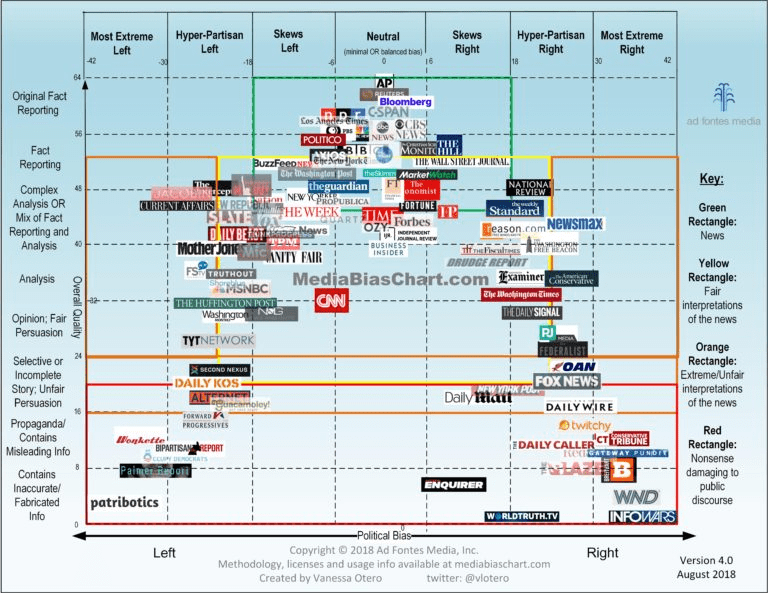
In order for our democracy to function properly, it is crucial that the voting populous is able to gather facts about the world and integrate that data into a model upon which wise decisions are made.
University of Rhode Island professor, Julie Coiro and her colleagues surveyed middle grade students and found that over 70% of students were, “more concerned with content relevance than with credibility.”
It is clear that more time during staff development needs to be dedicated to addressing this issue. Not only are the media outlets severely polarizing, the students are demonstrating a need.

Leave a comment